Category Archives: Conference Finance Series
51-100 Most Profitable FBS Football and Basketball Programs
Over the past week, we’ve posted financials for every football and men’s basketball program in the FBS, with the exception of the military academies. Here are the links: ACC, Big XII, Big East, C-USA, Big Ten, MAC, Pac-12, SEC, Sun Belt, Mountain West and WAC. Yesterday we presented the Top 50 most profitable FBS football and men’s basketball programs.
Below you will find the 51-100 most profitable programs. The “% Invested” column shows how much of the specific sport’s revenue goes back into that specific sport.
Please read below before viewing the financials.
About the data: All of the data is from reports each school files with the US Department of Education. It is the only available data for both public and private universities. However, there can be variances in how each school chooses to report data. For example, each school can decide for itself whether to break out television revenue by sport or leave it in a generic revenue category, which causes variances. After speaking with dozens of schools the most common practice appears to be attributing the majority of television revenue to football and a portion to basketball. The most common split is 65/35.
There are also variances from year-to-year, so be careful when comparing this data to last year’s data. For example, Florida State’s football program showed a gain of approximately $14 million from ’09-’10 to ’10-’11. When contacted for comment FSU explained that in ’10-’11 they broke out contributions by sport, which they hadn’t done previously.
Although far from perfect, this data is the only available data for all Division I programs (with the exception of the military academies). We just want to make you aware of the possible variances and will let you draw your own conclusions.
Please note: we did not rank non-AQ schools last year, so those schools will not show a rank for ’09-’10.
| 10-11 Rank | 09-10 Rank | School | 10-11 Revenue | 10-11 Expenses | 10-11 Profit | % Invested |
| 51 | 62 | Kansas State (Football) | $19,731,620 | $10,867,052 | $8,864,568 | 55.07% |
| 52 | 56 | Northwestern Univ. (Football) | $28,198,769 | $19,430,675 | $8,768,094 | 68.91% |
| 53 | 60 | University of Texas (Basketball) | $16,437,705 | $8,195,360 | $8,242,345 | 49.86% |
| 54 | 45 | Indiana Univ. (Football) | $24,230,741 | $16,112,930 | $8,117,811 | 66.50% |
| 55 | 40 | Univ of Arizona (Football) | $25,448,212 | $17,965,169 | $7,483,043 | 70.60% |
| 56 | 50 | Michigan St. (Basketball) | $16,479,208 | $9,263,945 | $7,215,263 | 56.22% |
| 57 | 44 | Georgia Tech (Football) | $22,557,020 | $15,463,243 | $7,093,777 | 68.55% |
| 58 | 66 | Univ of California, Berkeley (Football) | $24,328,784 | $17,398,649 | $6,930,135 | 71.51% |
| 59 | 58 | Univ. of Tennessee (Basketball) | $13,785,893 | $6,863,233 | $6,922,660 | 49.78% |
| 60 | 24 | West Virginia University (Football) | $19,960,732 | $13,230,226 | $6,730,506 | 66.28% |
| 61 | 100 | Oklahoma State (Basketball) | $12,262,241 | $5,658,993 | $6,603,248 | 46.15% |
| 62 | 52 | North Carolina State (Basketball) | $10,490,494 | $3,947,120 | $6,543,374 | 37.63% |
| 63 | 67 | Northwestern (Basketball) | $11,018,639 | $4,577,278 | $6,441,361 | 41.54% |
| 64 | 54 | University of Pittsburgh (Basketball) | $13,574,317 | $7,181,490 | $6,392,827 | 52.90% |
| 65 | UNLV (Basketball) | $10,123,168 | $3,806,508 | $6,316,660 | 37.60% | |
| 66 | 71 | Univ. of Kentucky (Basketball) | $18,557,243 | $12,355,375 | $6,201,868 | 66.58% |
| 67 | 128 | Vanderbilt Univ. (Football) | $22,455,110 | $16,507,997 | $5,947,113 | 73.52% |
| 68 | 63 | Purdue Univ. (Football) | $18,359,413 | $12,420,742 | $5,938,671 | 67.65% |
| 69 | 81 | University of Missouri (Basketball) | $11,084,210 | $5,391,400 | $5,692,810 | 48.64% |
| 70 | 68 | Marquette (Basketball) | $15,568,569 | $10,348,303 | $5,220,266 | 66.47% |
| 71 | Boise State (Football) | $12,950,605 | $7,834,316 | $5,116,289 | 60.49% | |
| 72 | 55 | Univ of California, Los Angeles (Football) | $23,017,910 | $17,913,658 | $5,104,252 | 77.82% |
| 73 | 47 | Univ. of Arkansas (Basketball) | $14,608,513 | $9,548,135 | $5,060,378 | 65.36% |
| 74 | 65 | Univ of California, Los Angeles (Basketball) | $11,621,364 | $6,702,818 | $4,918,546 | 57.68% |
| 75 | 69 | Maryland (Basketball) | $10,965,638 | $6,062,659 | $4,902,979 | 55.29% |
| 76 | BYU (Football) | $15,664,108 | $10,764,814 | $4,899,294 | 68.72% | |
| 77 | 64 | Univ of Washington (Basketball) | $10,474,040 | $5,702,562 | $4,771,478 | 54.44% |
| 78 | 80 | Penn St. (Basketball) | $9,485,900 | $4,851,361 | $4,634,539 | 51.14% |
| 79 | 78 | University of South Florida (Football) | $17,017,821 | $12,657,523 | $4,360,298 | 74.38% |
| 80 | 79 | Univ. of Alabama (Basketball) | $11,016,184 | $6,819,080 | $4,197,104 | 61.90% |
| 81 | 98 | Purdue (Basketball) | $9,396,189 | $5,204,365 | $4,191,824 | 55.39% |
| 82 | 89 | Michigan (Basketball) | $9,154,689 | $5,102,129 | $4,052,560 | 55.73% |
| 83 | 70 | Georgia Tech (Basketball) | $8,543,269 | $4,625,109 | $3,918,160 | 54.14% |
| 84 | 35 | University of Missouri (Football) | $24,694,807 | $20,806,778 | $3,888,029 | 84.26% |
| 85 | 82 | Stanford University (Football) | $19,521,092 | $15,888,069 | $3,633,023 | 81.39% |
| 86 | 86 | Washington State (Football) | $12,741,698 | $9,193,553 | $3,548,145 | 72.15% |
| 87 | 75 | Wake Forest (Basketball) | $8,261,666 | $4,773,315 | $3,488,351 | 57.78% |
| 88 | 84 | Univ. of Georgia (Basketball) | $8,718,363 | $5,253,434 | $3,464,929 | 60.26% |
| 89 | 94 | Texas A&M (Basketball) | $9,786,655 | $6,340,072 | $3,446,583 | 64.78% |
| 90 | 111 | Duke University (Football) | $18,243,589 | $14,837,825 | $3,405,764 | 81.33% |
| 91 | 95 | Clemson (Basketball) | $7,705,630 | $4,417,665 | $3,287,965 | 57.33% |
| 92 | 72 | Univ. of South Carolina (Basketball) | $7,849,818 | $4,618,566 | $3,231,252 | 58.84% |
| 93 | Army (Football) | $8,839,775 | $5,620,774 | $3,219,001 | 63.59% | |
| 94 | 77 | Virginia Tech (Basketball) | $7,858,609 | $4,782,477 | $3,076,132 | 60.86% |
| 95 | Cal State – Fresno (Football) | $10,059,929 | $7,040,523 | $3,019,406 | 69.99% | |
| 96 | Wyoming (Football) | $8,677,505 | $5,770,034 | $2,907,471 | 66.49% | |
| 97 | 88 | Univ. of Mississippi (Basketball) | $7,175,223 | $4,270,576 | $2,904,647 | 59.52% |
| 98 | 85 | Mississippi State Univ. (Basketball) | $6,914,565 | $4,052,623 | $2,861,942 | 58.61% |
| 99 | Utah (Basketball) | $6,220,172 | $3,516,570 | $2,703,602 | 56.53% | |
| 100 | 57 | West Virginia University (Basketball) | $7,968,819 | $5,333,891 | $2,634,928 | 66.93% |
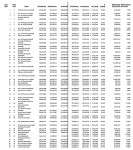
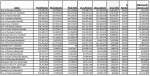
We’ve also created a comprehensive chart with comparisons to ’09-’10: Top 51-100 Most Profitable Programs 10-11 (.pdf)
Top 50 Most Profitable FBS Football and Men’s Basketball Programs
Over the past week, we’ve posted financials for every football and men’s basketball program in the FBS, with the exception of the military academies. Here are the links: ACC, Big XII, Big East, C-USA, Big Ten, MAC, Pac-12, SEC, Sun Belt, Mountain West and WAC.
Below you will find the top 50 most profitable programs. We’ll post 51-100 later today. The “% Invested” column shows how much of the specific sport’s revenue goes back into that specific sport.
Please read below before viewing the financials.
About the data: All of the data is from reports each school files with the US Department of Education. It is the only available data for both public and private universities. However, there can be variances in how each school chooses to report data. For example, each school can decide for itself whether to break out television revenue by sport or leave it in a generic revenue category, which causes variances. After speaking with dozens of schools the most common practice appears to be attributing the majority of television revenue to football and a portion to basketball. The most common split is 65/35.
There are also variances from year-to-year, so be careful when comparing this data to last year’s data. For example, Florida State’s football program showed a gain of approximately $14 million from ’09-’10 to ’10-’11. When contacted for comment FSU explained that in ’10-’11 they broke out contributions by sport, which they hadn’t done previously.
Although far from perfect, this data is the only available data for all Division I programs (with the exception of the military academies). We just want to make you aware of the possible variances and will let you draw your own conclusions.
| 10-11 Rank | 09-10 Rank | School | 10-11 Revenue | 10-11 Expenses | 10-11 Profit |
| 1 | 1 | University of Texas (Football) | $95,749,684 | $24,507,352 | $71,242,332 |
| 2 | 3 | Penn State Univ. (Football) | $72,747,734 | $19,519,288 | $53,228,446 |
| 3 | 2 | Univ. of Georgia (Football) | $74,888,175 | $22,036,338 | $52,851,837 |
| 4 | 6 | Louisiana State Univ. (Football) | $68,510,141 | $21,492,741 | $47,017,400 |
| 5 | 4 | Univ. of Michigan (Football) | $70,300,676 | $23,552,233 | $46,748,443 |
| 6 | 5 | Univ. of Florida (Football) | $72,807,236 | $26,263,539 | $46,543,697 |
| 7 | 7 | Univ. of Alabama (Football) | $76,801,800 | $31,580,059 | $45,221,741 |
| 8 | 12 | Notre Dame (Football) | $68,782,560 | $25,164,887 | $43,617,673 |
| 9 | 8 | Univ. of Tennessee (Football) | $56,831,514 | $19,135,650 | $37,695,864 |
| 10 | 9 | Auburn Univ. (Football) | $76,227,804 | $39,069,676 | $37,158,128 |
| 11 | 17 | Univ. of Arkansas (Football) | $61,131,707 | $24,059,193 | $37,072,514 |
| 12 | 10 | University of Oklahoma (Football) | $58,811,324 | $23,191,402 | $35,619,922 |
| 13 | 13 | University of Nebraska (Football) | $54,712,406 | $20,147,302 | $34,565,104 |
| 14 | 18 | Texas A&M (Football) | $45,414,074 | $15,560,216 | $29,853,858 |
| 15 | 16 | Michigan State Univ. (Football) | $45,040,778 | $17,420,499 | $27,620,279 |
| 16 | 21 | University of Louisville (Basketball) | $40,887,938 | $13,336,649 | $27,551,289 |
| 17 | 14 | Ohio State Univ. (Football) | $60,837,342 | $34,373,844 | $26,463,498 |
| 18 | 15 | Univ. of Iowa (Football) | $44,506,832 | $20,510,807 | $23,996,025 |
| 19 | 11 | Univ. of South Carolina (Football) | $45,464,058 | $22,482,479 | $22,981,579 |
| 20 | 19 | Univ. of Kentucky (Football) | $34,020,276 | $14,352,110 | $19,668,166 |
| 21 | 22 | Univ. of Wisconsin (Football) | $43,296,599 | $23,662,925 | $19,633,674 |
| 22 | 20 | Oklahoma State (Football) | $33,213,396 | $13,787,271 | $19,426,125 |
| 23 | 27 | Univ of Washington (Football) | $39,405,237 | $21,306,380 | $18,098,857 |
| 24 | 99 | Florida State Univ. (Football) | $35,870,789 | $18,689,809 | $17,180,980 |
| 25 | 30 | Univ. of Illinois (Football) | $28,079,694 | $12,910,507 | $15,169,187 |
| 26 | 29 | Duke (Basketball) | $28,917,329 | $13,819,529 | $15,097,800 |
| 27 | 26 | Virginia Tech (Football) | $35,083,799 | $20,009,657 | $15,074,142 |
| 28 | 33 | Univ of Arizona (Basketball) | $21,209,980 | $6,918,239 | $14,291,741 |
| 29 | 28 | Clemson Univ. (Football) | $31,730,042 | $17,992,943 | $13,737,099 |
| 30 | 25 | Univ. of Minnesota (Football) | $30,524,945 | $16,985,182 | $13,539,763 |
| 31 | 31 | North Carolina (Basketball) | $19,672,012 | $6,510,942 | $13,161,070 |
| 32 | 34 | Ohio St. (Basketball) | $17,020,807 | $5,251,724 | $11,769,083 |
| 33 | 48 | Univ of Southern California (Football) | $31,148,724 | $19,423,723 | $11,725,001 |
| 34 | 41 | Syracuse University (Basketball) | $19,017,231 | $7,532,455 | $11,484,776 |
| 35 | 51 | Univ. of North Carolina (Football) | $26,385,760 | $15,050,721 | $11,335,039 |
| 36 | 37 | Arizona State (Football) | $27,842,879 | $16,564,598 | $11,278,281 |
| 37 | 76 | Mississippi State Univ. (Football) | $22,575,985 | $11,766,024 | $10,809,961 |
| 38 | 38 | Texas Tech (Football) | $26,569,287 | $15,788,943 | $10,780,344 |
| 39 | 23 | Univ. of Mississippi (Football) | $28,515,471 | $17,764,174 | $10,751,297 |
| 40 | 36 | North Carolina State (Football) | $21,856,742 | $11,329,718 | $10,527,024 |
| 41 | 90 | University of Louisville (Football) | $25,658,653 | $15,582,161 | $10,076,492 |
| 42 | 42 | Wisconsin (Basketball) | $16,353,313 | $6,394,547 | $9,958,766 |
| 43 | 46 | Indiana (Basketball) | $17,804,586 | $7,945,102 | $9,859,484 |
| 44 | Utah (Football) | $21,235,202 | $11,426,280 | $9,808,922 | |
| 45 | 43 | Illinois (Basketball) | $15,408,818 | $5,630,297 | $9,778,521 |
| 46 | 32 | University of Colorado (Football) | $25,955,136 | $16,308,544 | $9,646,592 |
| 47 | 49 | Minnesota (Basketball) | $15,141,713 | $5,549,650 | $9,592,063 |
| 48 | 39 | Univ of Oregon (Football) | $27,713,278 | $18,198,476 | $9,514,802 |
| 49 | 53 | Oregon State (Football) | $21,690,794 | $12,282,221 | $9,408,573 |
| 50 | 61 | Iowa State (Football) | $21,862,535 | $12,513,317 | $9,349,218 |
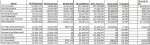
We’ve also created a comprehensive chart with comparisons to ’09-’10: Top 50 Most Profitable Programs ’10-’11 (.pdf)
WAC Financials ’10-’11
The next conference we’re looking at is the Western Athletic Conference. The ACC, Big XII, Big East, C-USA, Big Ten, MAC, Pac-12, SEC and Mountain West have been previously posted. The chart is sorted by ’10-11 profits for each football and basketball program from greatest profit to least. The “% Invested” column shows how much of the specific sport’s revenue goes back into that specific sport. Please read below before viewing the financials.
About the data: All of the data is from reports each school files with the US Department of Education. It is the only available data for both public and private universities. However, there can be variances in how each school chooses to report data. For example, each school can decide for itself whether to break out television revenue by sport or leave it in a generic revenue category, which causes variances. After speaking with dozens of schools the most common practice appears to be attributing the majority of television revenue to football and a portion to basketball. The most common split is 65/35.
There are also variances from year-to-year, so be careful when comparing this data to last year’s data. For example, Florida State’s football program showed a gain of approximately $14 million from ’09-’10 to ’10-’11. When contacted for comment FSU explained that in ’10-’11 they broke out contributions by sport, which they hadn’t done previously.
Although far from perfect, this data is the only available data for all Division I programs (with the exception of the military academies). We just want to make you aware of the possible variances and will let you draw your own conclusions.
Sun Belt Financials ’10-’11
The next conference we’re looking at is the Sun Belt. The ACC, Big XII, Big East, C-USA, Big Ten, MAC, Pac-12, SEC and Mountain West have been previously posted. The chart is sorted by ’10-11 profits for each football and basketball program from greatest profit to least. The “% Invested” column shows how much of the specific sport’s revenue goes back into that specific sport. Please read below before viewing the financials.
About the data: All of the data is from reports each school files with the US Department of Education. It is the only available data for both public and private universities. However, there can be variances in how each school chooses to report data. For example, each school can decide for itself whether to break out television revenue by sport or leave it in a generic revenue category, which causes variances. After speaking with dozens of schools the most common practice appears to be attributing the majority of television revenue to football and a portion to basketball. The most common split is 65/35.
There are also variances from year-to-year, so be careful when comparing this data to last year’s data. For example, Florida State’s football program showed a gain of approximately $14 million from ’09-’10 to ’10-’11. When contacted for comment FSU explained that in ’10-’11 they broke out contributions by sport, which they hadn’t done previously.
Although far from perfect, this data is the only available data for all Division I programs (with the exception of the military academies). We just want to make you aware of the possible variances and will let you draw your own conclusions.
Mountain West Financials ’10-’11
The next conference we’re looking at is the Mountain West. The ACC, Big XII, Big East, C-USA, Big Ten, MAC, Pac-12 and SEC have been previously posted. The chart is sorted by ’10-11 profits for each football and basketball program from greatest profit to least. The “% Invested” column shows how much of the specific sport’s revenue goes back into that specific sport. Please read below before viewing the financials.
About the data: All of the data is from reports each school files with the US Department of Education. It is the only available data for both public and private universities. However, there can be variances in how each school chooses to report data. For example, each school can decide for itself whether to break out television revenue by sport or leave it in a generic revenue category, which causes variances. After speaking with dozens of schools the most common practice appears to be attributing the majority of television revenue to football and a portion to basketball. The most common split is 65/35.
There are also variances from year-to-year, so be careful when comparing this data to last year’s data. For example, Florida State’s football program showed a gain of approximately $14 million from ’09-’10 to ’10-’11. When contacted for comment FSU explained that in ’10-’11 they broke out contributions by sport, which they hadn’t done previously.
Although far from perfect, this data is the only available data for all Division I programs (with the exception of the military academies). We just want to make you aware of the possible variances and will let you draw your own conclusions.
*Please note: data for Air Force is not available.
SEC Financials ’10-’11
The next conference we’re looking at is the SEC. The ACC, Big XII, Big East, C-USA, Big Ten, MAC and Pac-12 have been previously posted. The chart is sorted by ’10-11 profits for each football and basketball program from greatest profit to least. The “% Invested” column shows how much of the specific sport’s revenue goes back into that specific sport. Please read below before viewing the financials.
About the data: All of the data is from reports each school files with the US Department of Education. It is the only available data for both public and private universities. However, there can be variances in how each school chooses to report data. For example, each school can decide for itself whether to break out television revenue by sport or leave it in a generic revenue category, which causes variances. After speaking with dozens of schools the most common practice appears to be attributing the majority of television revenue to football and a portion to basketball. The most common split is 65/35.
There are also variances from year-to-year, so be careful when comparing this data to last year’s data. For example, Florida State’s football program showed a gain of approximately $14 million from ’09-’10 to ’10-’11. When contacted for comment FSU explained that in ’10-’11 they broke out contributions by sport, which they hadn’t done previously.
Although far from perfect, this data is the only available data for all Division I programs. We just want to make you aware of the possible variances and will let you draw your own conclusions.
d*When contacted about the large disparity between ’09-’10 and ’10-’11 football profits, University of South Carolina indicated they changed their reporting procedures. In ’09-’10, South Carolina broke donations to the Gamecock Club donations about by sport based on ticket sales. However, for ’10-’11 South Carolina reported all Gamecock Club donations in the non-sport specific revenue category.
Pac-12 Financials ’10-’11
The next conference we’re looking at is the Pac-12. The ACC, Big XII, Big East, C-USA, Big Ten and MAC have been previously posted. The chart is sorted by ’10-11 profits for each football and basketball program from greatest profit to least. The “% Invested” column shows how much of the specific sport’s revenue goes back into that specific sport. Please read below before viewing the financials.
About the data: All of the data is from reports each school files with the US Department of Education. It is the only available data for both public and private universities. However, there can be variances in how each school chooses to report data. For example, each school can decide for itself whether to break out television revenue by sport or leave it in a generic revenue category, which causes variances. After speaking with dozens of schools the most common practice appears to be attributing the majority of television revenue to football and a portion to basketball. The most common split is 65/35.
There are also variances from year-to-year, so be careful when comparing this data to last year’s data. For example, Florida State’s football program showed a gain of approximately $14 million from ’09-’10 to ’10-’11. When contacted for comment FSU explained that in ’10-’11 they broke out contributions by sport, which they hadn’t done previously.
Although far from perfect, this data is the only available data for all Division I programs. We just want to make you aware of the possible variances and will let you draw your own conclusions.
Mid-American Conference Financials ’10-’11
The next conference we’re looking at is the MAC. The ACC, Big XII, Big East, C-USA and Big Ten have been previously posted. The chart is sorted by ’10-11 profits for each football and basketball program from greatest profit to least. The “% Invested” column shows how much of the specific sport’s revenue goes back into that specific sport. Please read below before viewing the financials.
About the data: All of the data is from reports each school files with the US Department of Education. It is the only available data for both public and private universities. However, there can be variances in how each school chooses to report data. For example, each school can decide for itself whether to break out television revenue by sport or leave it in a generic revenue category, which causes variances. After speaking with dozens of schools the most common practice appears to be attributing the majority of television revenue to football and a portion to basketball. The most common split is 65/35.
There are also variances from year-to-year, so be careful when comparing this data to last year’s data. For example, Florida State’s football program showed a gain of approximately $14 million from ’09-’10 to ’10-’11. When contacted for comment FSU explained that in ’10-’11 they broke out contributions by sport, which they hadn’t done previously.
Although far from perfect, this data is the only available data for all Division I programs. We just want to make you aware of the possible variances and will let you draw your own conclusions.
Big Ten Financials ’10-’11
The next conference we’re looking at is the Big Ten. The ACC, Big XII, Big East and C-USA have been previously posted. The chart is sorted by ’10-11 profits for each football and basketball program from greatest profit to least. The “% Invested” column shows how much of the specific sport’s revenue goes back into that specific sport. Please read below before viewing the financials.
About the data: All of the data is from reports each school files with the US Department of Education. It is the only available data for both public and private universities. However, there can be variances in how each school chooses to report data. For example, each school can decide for itself whether to break out television revenue by sport or leave it in a generic revenue category, which causes variances. After speaking with dozens of schools the most common practice appears to be attributing the majority of television revenue to football and a portion to basketball. The most common split is 65/35.
There are also variances from year-to-year, so be careful when comparing this data to last year’s data. For example, Florida State’s football program showed a gain of approximately $14 million from ’09-’10 to ’10-’11. When contacted for comment FSU explained that in ’10-’11 they broke out contributions by sport, which they hadn’t done previously.
Although far from perfect, this data is the only available data for all Division I programs. We just want to make you aware of the possible variances and will let you draw your own conclusions.
C-USA Financials ’10-’11
The next conference we’re looking at is C-USA. The ACC, Big XII and Big East were posted yesterday. The chart is sorted by ’10-11 profits for each football and men’s basketball program from greatest profit to least. The “% Invested” column shows how much of the specific sport’s revenue goes back into that specific sport. Please read below before viewing the financials.
About the data: All of the data is from reports each school files with the US Department of Education. It is the only available data for both public and private universities. However, there can be variances in how each school chooses to report data. For example, each school can decide for itself whether to break out television revenue by sport or leave it in a generic revenue category, which causes variances. After speaking with dozens of schools the most common practice appears to be attributing the majority of television revenue to football and a portion to basketball. The most common split is 65/35.
There are also variances from year-to-year, so be careful when comparing this data to last year’s data. For example, Florida State’s football program showed a gain of approximately $14 million from ’09-’10 to ’10-’11. When contacted for comment FSU explained that in ’10-’11 they broke out contributions by sport, which they hadn’t done previously.
Although far from perfect, this data is the only available data for all Division I programs. We just want to make you aware of the possible variances and will let you draw your own conclusions.