Data Released: What We Know About NIL Go Reviewing NIL Deals
 By Kristi Dosh

Last Updated on January 13, 2026
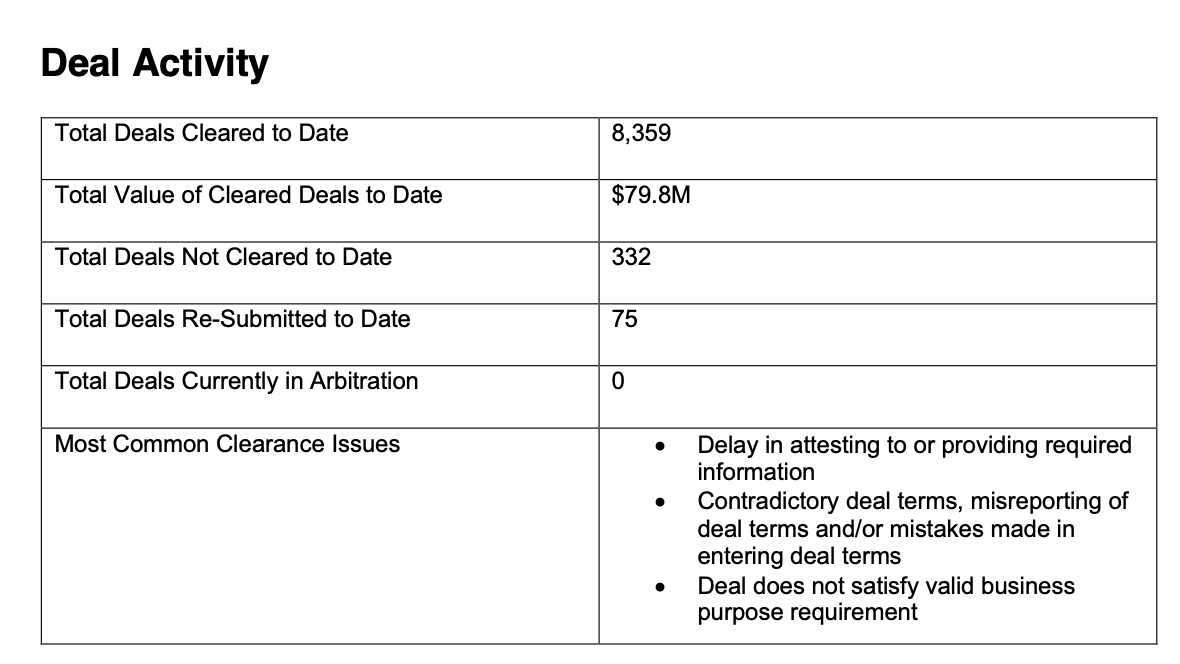
Today, the College Sports Commission released what it says will be the first of its periodic release of data on the deal flow in NIL Go. It shows $79.8 million in deals has been cleared by its system, and although 332 deals have not cleared, and 75 have needed to be resubmitted with additional or revised details, none are currently in arbitration challenging CSC’s decisions.
As a reminder, all NIL deals offered to DI athletes over $600 (including multiple deals with the same party more than $600 in the aggregate) must be submitted to NIL Go.
Here’s a look at the information shared by CSC today:

The CSC originally put out this chart, but then revised it due to a clerical error to the chart below:

Ross Dellenger reported today that millions of dollars in deals are being held up by CSC from collectives. A group of 25 collectives aggregated their data and shared the following:

Only deals with “associated entities” are subject to a more detailed review by the CSC, where they must pass a “valid business purpose” test and be determined to be within a “reasonable range of compensation.
An associated entity is:
- 1.An entity that is or was known (or should have been known) to the athletics department staff of an institution, to exist, in significant part, for the purpose of (a) promoting or supporting a particular institution’s intercollegiate athletics program or student-athletes; and/or (b) creating or identifying NIL opportunities solely for a particular Member Institution’s student-athletes;
- 2.An entity that has been directed or requested by an institution’s athletics department staff to assist in the recruitment or retention of prospective or current student-athletes, or otherwise has assisted in the recruitment or retention of prospective or current student-athletes; or
- 3.Any entity owned, controlled, or operated by, or otherwise affiliated with an associated entity or individual other than a publicly traded corporation.
This is why we see collectives having deals rejected and being held up in the system (and previously rejected outright for not meeting the “valid business purpose” requirement). The CSC only recently hired its fourth employee and is reviewing every deal individually for the “valid business purpose” and “reasonable range of compensation” requirements.
The CSC says it looks at a number of factors when determining whether a deal meets the “reasonable range of compensation” requirement. Factors include: the deal’s performance obligations, athletic performance, social media reach, and institutional market size.
The CSC says payment “must be at rates and terms commensurate with compensation paid to similarly situated individuals with comparable NIL value who are not current or prospective student-athletes at the institution the student-athlete is currently enrolled in or being recruited to attend.” The data the CSC is working to compare from comes from previous deals between athletes and publicly-traded companies and will be continually added to in the future.
If a deal is rejected, it can be resubmitted with additional information or revised terms. Athletes also have the option to take the deal through an arbitration process
One frustration I’ve heard from multiple collectives is that the CSC requires athletes to submit deals within five (5) business days but has no timeline for how long it will take to review those deals.
Often, athletes have opportunities to capitalize on gameday performance and need to act quickly. They can move forward with the deal before the CSC has rendered a decision, but if it was later rejected they would have to either give the money back, fight the CSC decision through arbitration, or suffer penalties (which haven’t fully been disclosed at this point).
The collectives in Dellenger’s article have suggested changes for the CSC, including a real-time support channel with CSC, clearer definitions of “fair market value,” fast-tracking time-sensitive deals and more.
Check out later CSC deal reports: